A Revitalization Project Embracing Hatay Through Design
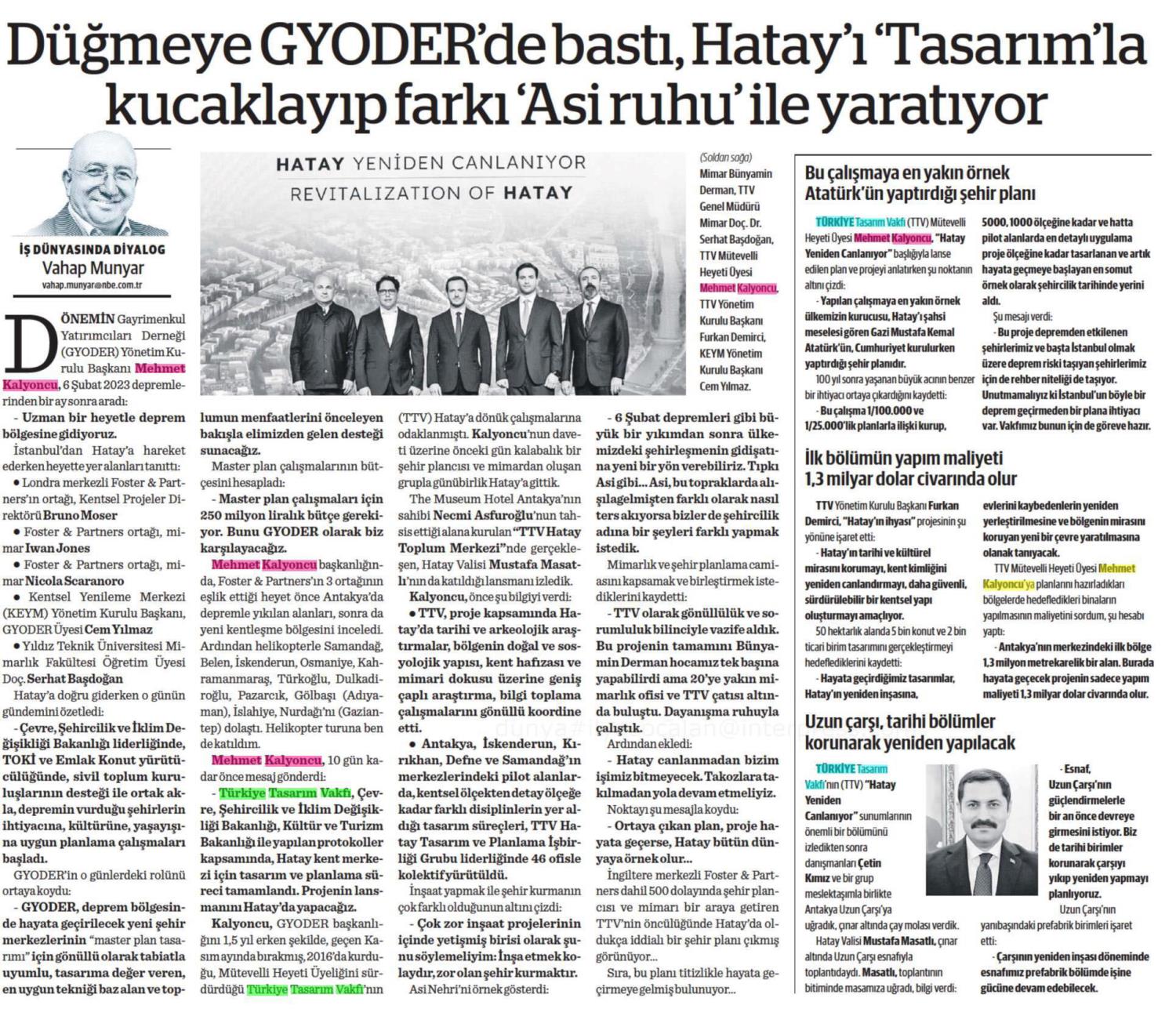
Following the February 6 earthquakes, comprehensive work bringing together the public sector, civil society, and the worlds of architecture and urban planning is under way to restore Hatay. Led by the Türkiye Design Foundation (TTV), the “Hatay Is Reviving” initiative aims not only to rebuild the city but to prepare it for the future while preserving its historical, cultural and social values.
The Association of Real Estate and Real Estate Investment Companies (GYODER) also played an important role in shaping the project. GYODER Chairman Mehmet Kalyoncu and the accompanying delegation assessed local needs and the requirements of the reconstruction process during site visits in the earthquake zone.
Collective Wisdom for the Master Plan
Master planning holds an important place in Hatay’s reconstruction. Under the leadership of the Ministry of Environment, Urbanization and Climate Change, and with the involvement of TOKİ and Emlak Konut, the work aims to create new city centers suited to the needs of the earthquake-affected areas.
Within the framework of protocols signed between the Ministry of Environment, Urbanization and Climate Change and the Ministry of Culture and Tourism, the Türkiye Design Foundation carried out the design and planning process for Hatay’s city center.
The work examined Hatay’s historical and archaeological assets as well as the region’s natural and sociological structure, urban memory and architectural fabric.
46 Design Offices Came Together for Hatay
Design studies at different scales were carried out in pilot areas in the centers of Antakya, İskenderun, Kırıkhan, Defne and Samandağ. It was stated that 46 design offices contributed to the process under the leadership of the Türkiye Design Foundation’s Design and Planning Collaboration Group.
Pointing out that a different approach to urban planning must be developed after the earthquake, Mehmet Kalyoncu stated that the plan prepared for Hatay could set an example for the world if it is implemented.
The project is also intended to serve as a guiding model for other cities facing earthquake risk.
Historic Hatay Will Be Carried Into the Future
Preserving historical and cultural heritage is one of the core elements of Hatay’s revitalization. The planning process aims to ensure that the city does not lose its identity, that historic areas are protected, and that reconstruction maintains Hatay’s connection with its past.
In this context, particular emphasis is placed on rebuilding the Long Bazaar (Uzun Çarşı) and the historic city quarter while preserving them. Maintaining the area’s authentic identity during the reconstruction of the historic bazaars and enabling local tradespeople to continue their commercial life are also among the key planning priorities.
The First Phase Will Cost Around $1.3 Billion
The first project area in central Hatay is reported to cover approximately 1.3 million square meters. Mehmet Kalyoncu stated that the construction cost alone of the project to be implemented in this phase could be around $1.3 billion.
Furkan Demirci, Chairman of the Board of the Türkiye Design Foundation, said the aim is to design 5,000 housing units and 2,000 commercial units on an area of approximately 50 hectares.
This comprehensive approach for Hatay brings together the goals of protecting historical heritage, creating disaster-resilient cities and improving quality of life within a single planning process. The Hatay Revitalization Project aims to redesign the city’s future while preserving its past, and to set an example for other earthquake-prone cities in Türkiye.