International Collaboration for the Revival of Hatay
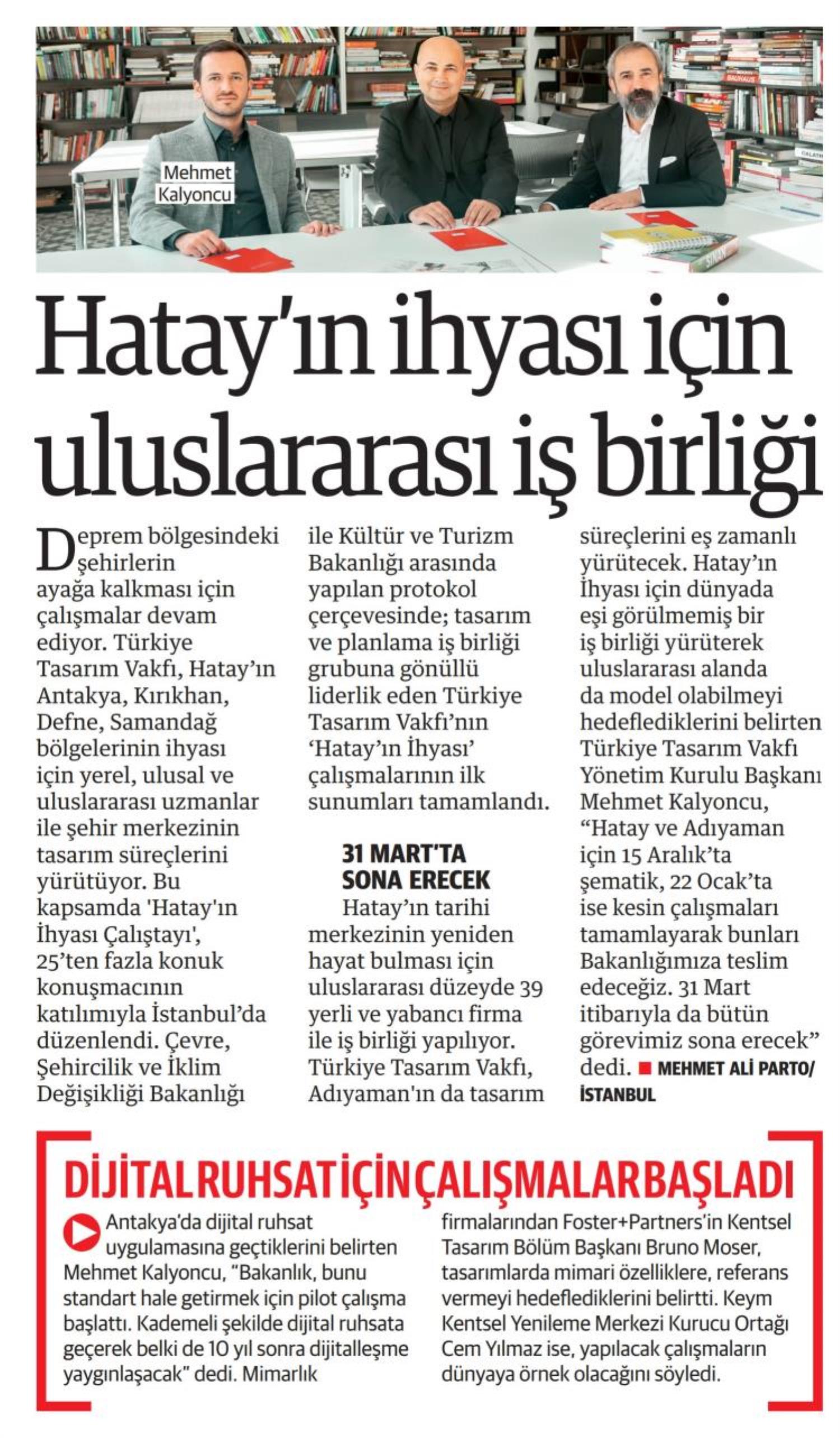
The Türkiye Design Foundation (TTV) is continuing the design and planning work it carries out to restore Hatay after the February 6 earthquakes with the participation of national and international experts. Covering Antakya, Kırıkhan, Defne and Samandağ, the work aims to redesign the city centers while preserving their historical identity.
As part of this effort, the “Revival of Hatay Workshop” held in Istanbul brought together more than 25 topics and speakers. The workshop addressed urbanism, architecture, planning and urban transformation for Hatay’s future, gathering the views of experts from different disciplines.
Hatay’s Historic Center Is Being Designed With International Experts
The Türkiye Design Foundation is voluntarily leading the design and planning collaboration carried out under the protocol between the Ministry of Environment, Urbanization and Climate Change and the Ministry of Culture and Tourism.
To bring Hatay’s historic city center back to life, the Foundation is collaborating internationally with 39 Turkish and international firms. The project’s core approach is not simply to construct new buildings after the earthquake, but to carry out a comprehensive revival process that preserves Hatay’s historical fabric and urban identity.
The Türkiye Design Foundation is also running the design processes for Adıyaman at the same time. This sets out a comprehensive working model in which different areas of expertise are brought together toward the same goal in the earthquake-affected cities.
Mehmet Kalyoncu: We Aim to Become an International Model
Mehmet Kalyoncu, Chairman of the Board of the Türkiye Design Foundation, stated that they are carrying out a collaboration of a scale rarely seen anywhere in the world for the revival of Hatay.
Noting that the work for Hatay and Adıyaman is progressing according to the set schedule, Kalyoncu said that once the design and planning processes are completed, the projects will be handed over to the relevant ministries.
It was emphasized that the work is not only aimed at rebuilding the earthquake-affected regions; with its structure bringing together different institutions, architecture offices and experts, it is also intended to serve as an example for similar projects in the future.
Digital Permit Work Has Begun in Antakya
The digital permit application was one of the project’s notable topics. Mehmet Kalyoncu stated that pilot work on a digital permit system has begun in Antakya.
The application aims to move construction and permit processes to a digital environment step by step. Over time, the system is expected to be developed further and to help spread digitalization in urban planning and construction processes.
The international architecture and design teams taking part in the work also emphasized that the city’s architectural features and references were taken into account in the projects prepared for Hatay. Bruno Moser, Head of Urban Design at Foster + Partners, highlighted the architectural features and goals of the design process, while Cem Yılmaz, Co-Founder of the Urban Renewal Center, stated that the work will put forward a model that could set an example for the world.
Led by the Türkiye Design Foundation, the work for the revival of Hatay aims to protect historical heritage, apply modern urban planning approaches and bring different areas of expertise together around a shared planning vision.